


Some error occured while loading the Quick View. Please close the Quick View and try reloading the page.
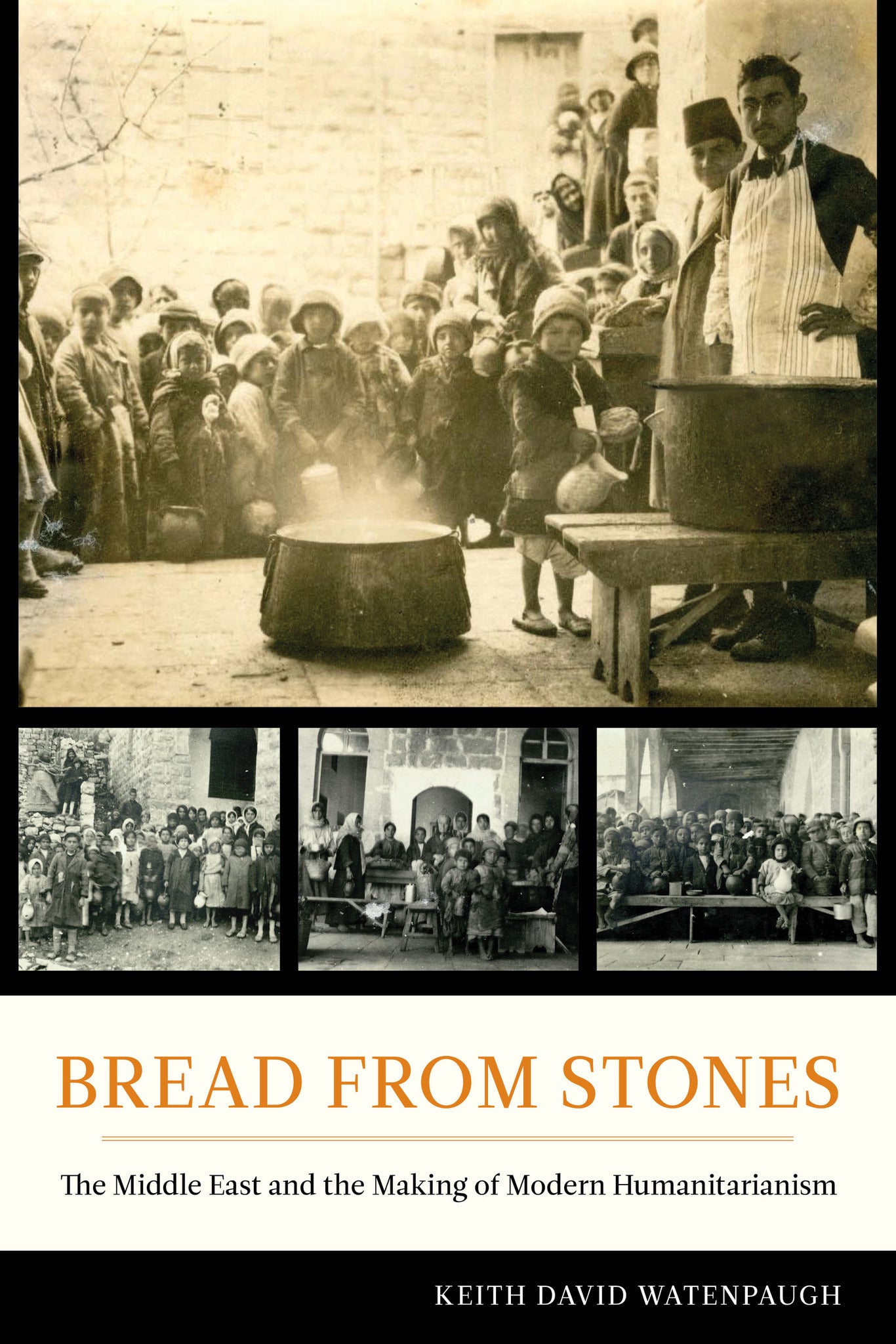
Bread from Stones, a highly anticipated book from historian Keith David Watenpaugh, breaks new ground in analyzing the theory and practice of modern humanitarianism. Genocide and mass violence, human trafficking, and the forced displacement of millions in the early twentieth century Eastern Mediterranean form the background for this exploration of humanitarianism’s role in the history of human rights.
Watenpaugh’s unique and provocative examination of humanitarian thought and action from a non-Western perspective goes beyond canonical descriptions of relief work and development projects. Employing a wide range of source materials—literary and artistic responses to violence, memoirs, and first-person accounts from victims, perpetrators, relief workers, and diplomats—Watenpaugh argues that the international answer to the inhumanity of World War I in the Middle East laid the foundation for modern humanitarianism and the specific ways humanitarian groups and international organizations help victims of war, care for trafficked children, and aid refugees.
Bread from Stones is required reading for those interested in humanitarianism and its ideological, institutional, and legal origins, as well as the evolution of the movement following the collapse of the Ottoman Empire and the advent of late colonialism in the Middle East.
Watenpaugh’s unique and provocative examination of humanitarian thought and action from a non-Western perspective goes beyond canonical descriptions of relief work and development projects. Employing a wide range of source materials—literary and artistic responses to violence, memoirs, and first-person accounts from victims, perpetrators, relief workers, and diplomats—Watenpaugh argues that the international answer to the inhumanity of World War I in the Middle East laid the foundation for modern humanitarianism and the specific ways humanitarian groups and international organizations help victims of war, care for trafficked children, and aid refugees.
Bread from Stones is required reading for those interested in humanitarianism and its ideological, institutional, and legal origins, as well as the evolution of the movement following the collapse of the Ottoman Empire and the advent of late colonialism in the Middle East.

Price: $95.00
Pages: 272
Publisher: University of California Press
Imprint: University of California Press
Publication Date:
01 May 2015
Trim Size: 9.00 X 6.00 in
ISBN: 9780520279308
Format: Hardcover
BISACs:
"Impressive... Watenpaugh blends analysis of structural and political changes across a century of history with sensitive attention to the experiences of individual humanitarian actors and beneficiaries."
Keith David Watenpaugh is a historian, Associate Professor of Human Rights Studies, and Director of the Human Rights Initiative at the University of California, Davis. He is the author of Being Modern in the Middle East and has published in the American Historical Review, International Journal of Middle East Studies, Journal of Human Rights, Social History, and Humanity.
List of Illustrations
Preface and Acknowledgments
Note on Translation and Transliteration
List of Abbreviations
1. The Beginnings of the Humanitarian Era in the Eastern Mediterranean
2. The Humanitarian Imagination and the Year of the Locust: International Relief in the Wartime Eastern Mediterranean, 1914–1918
3. The Form and Content of Suffering: Humanitarian Knowledge, Mass Publics, and the Report, 1885–1927
4. “America’s Wards”: Near East Relief and American Humanitarian Exceptionalism, 1919–1923
5. The League of Nations Rescue of Trafficked Women and Children and the Paradox of Modern Humanitarianism, 1920–1936
6. Between Refugee and Citizen: The Practical Failures of Modern Humanitarianism, 1923–1939
7. Modern Humanitarianism’s Troubled Legacies, 1927–1948
Notes
Select Bibliography
Index
Preface and Acknowledgments
Note on Translation and Transliteration
List of Abbreviations
1. The Beginnings of the Humanitarian Era in the Eastern Mediterranean
2. The Humanitarian Imagination and the Year of the Locust: International Relief in the Wartime Eastern Mediterranean, 1914–1918
3. The Form and Content of Suffering: Humanitarian Knowledge, Mass Publics, and the Report, 1885–1927
4. “America’s Wards”: Near East Relief and American Humanitarian Exceptionalism, 1919–1923
5. The League of Nations Rescue of Trafficked Women and Children and the Paradox of Modern Humanitarianism, 1920–1936
6. Between Refugee and Citizen: The Practical Failures of Modern Humanitarianism, 1923–1939
7. Modern Humanitarianism’s Troubled Legacies, 1927–1948
Notes
Select Bibliography
Index